Executive Summary
Streaming businesses often use app installs as an acquisition KPI because the number is easy to understand. But on Connected TV, an install does not always mean someone actually used the app. An app can be present on a TV and never be opened.
That distinction matters because the first app open is the point where a potential user becomes an actual app user. For an ad-supported streaming service, no open means no viewing session and no opportunity to generate advertising revenue. For a subscription service, an app that is installed but never used can signal weak engagement and a greater risk that the customer will not see enough value to stay subscribed.
There is also an important measurement issue. CTV platforms can know when an app is installed on their devices. Measurement partners generally begin observing app activity only after the app launches and their measurement code can run. As a result, the word “install” can describe different events depending on the source. Before comparing CPI, CPAO, ROAS, or LTV, teams need to understand exactly what each metric represents.
Introduction
For streaming companies, acquisition is only valuable if it leads to usage. Getting an app onto a television is a step in that journey, but it is not the outcome the business ultimately needs.
A viewer who opens the app can browse content, watch a stream, see advertising, start a trial, subscribe, or return later. A viewer who never opens the app cannot do any of those things. That is why a verified first app open, often called a first app open or FAO, is a stronger activation signal than an install when the install metric represents app delivery to a device.
This does not mean installs are useless. Install data can tell a streaming company how broadly its app is being distributed. The problem starts when an install is treated as if it were the same thing as activation, engagement, or business value.
What Does “Install” Actually Mean?
The first challenge is terminology. “Install” does not mean exactly the same thing in every reporting system.
A CTV platform owns the operating system and app store on its devices, so it can observe when an app is added or installed. A measurement partner works differently. Its SDK or other measurement code typically begins sending app-level signals when the app is launched. AppsFlyer, for example, explains that its attribution SDK is triggered when an installed app is launched for the first time; Adjust describes an install as a download followed by the app being successfully opened for the first time. In those systems, what is labeled an attributed install is closely tied to first launch rather than app-store delivery alone.
That difference is easy to miss in an executive dashboard. Two reports may both contain a column called “installs” while measuring different moments in the customer journey. One may represent the app arriving on a device. Another may represent the first time the app actually runs.
Why the Difference Matters to the Business
The business does not make money because an app exists on a television. Value starts when a person uses it.
For an AVOD or FAST service, an unopened app creates no viewing session, which means no ad impressions and no advertising revenue from that user. For a subscription service, the same issue shows up differently. A customer who installs but does not use the service is less likely to build a viewing habit or perceive ongoing value. If the service also carries advertising, low usage can reduce both subscription value and advertising opportunity.
This is why acquisition teams should be careful about optimizing only toward the lowest cost per install. A campaign can produce inexpensive installs while generating relatively few verified opens. Another campaign may have a higher CPI but drive more people who actually open the app, watch content, and remain engaged. The second campaign can be the better investment even if the first looks cheaper at the top of the funnel.
For ROAS and LTV analysis, FAO is therefore often a more useful early activation signal than a platform install. It is still not the final measure of success, but it gets the analysis one step closer to actual customer behavior.
A Roku Example: One Action Can Create Multiple Installs
Roku provides a useful example of why install counts can be misleading if they are interpreted as individual activations. Roku’s current support documentation states that when multiple Roku devices are linked to the same Roku account, adding an app to one device automatically adds it to the other compatible devices on that account. Roku also notes that apps must be activated separately on each device.
Imagine a household with three Roku TVs linked to one account. A marketing campaign influences someone in the household to add a streaming app. That single decision can result in the app appearing on all three compatible Roku devices. Depending on how the platform report is constructed, the business may see multiple device-level installs even though only one person made the decision to add the app.
Now assume the viewer opens the app on only one television. The acquisition story looks very different depending on the metric used. The install count reflects distribution across devices. The verified first open reflects actual activation on the device where the viewer chose to use the app.
That can create a large difference between cost per install (CPI) and cost per app open (CPAO). A campaign may appear highly efficient when evaluated on CPI because account synchronization expands the number of devices carrying the app. CPAO asks a harder and more useful question: how much did it cost to generate a verified activation?
Roku is a documented example of this behavior. Similar assumptions should not automatically be applied to every CTV platform. Installation and account behavior should be validated against each platform’s current documentation before using it in measurement logic.
Why App Opens Are a Better Starting Signal for Quality
The purpose of using app opens is not to replace one single KPI with another. It is to move measurement closer to behavior that can create value.
A verified first open confirms that the viewer crossed the activation threshold. From there, the company can evaluate whether that user becomes engaged and valuable. The measurement chain can continue through repeat app opens, watch time, ad impressions, registration, trial starts, subscriptions, churn or disconnects, retention, LTV, and ultimately ROAS.
This also changes how marketers should think about media optimization. The goal is not simply to find the campaign with the lowest CPI or even the lowest CPAO. The more important question is which campaigns are producing users with stronger downstream engagement and higher LTV relative to acquisition cost.
That calculation is not always easy. Cross-device attribution can make it difficult to connect every marketing exposure to every CTV activation with complete accuracy. But imperfect attribution does not make the downstream metrics less important. It means teams should understand the confidence of their attribution while still optimizing toward the strongest business outcomes they can measure.
How Executives Should Evaluate CTV Acquisition
Instead of asking only, “How many installs did we get?” executives should ask a sequence of questions that follows the customer from distribution to value:
- What does “install” mean in this specific report? Is it app delivery to a device or first launch?
- How many verified first app opens did the campaign generate?
- What was the cost per verified app open compared with CPI?
- Which campaigns produced the strongest repeat app opens and watch time?
- Which sources produced more subscriptions, lower churn or disconnect rates, stronger repeat usage, and higher LTV?
- When we compare LTV with acquisition cost, which campaigns and channels produce the strongest ROAS?
- How confident are we that the attributed source reflects the real customer journey, especially when marketing and CTV activity occur on different devices?
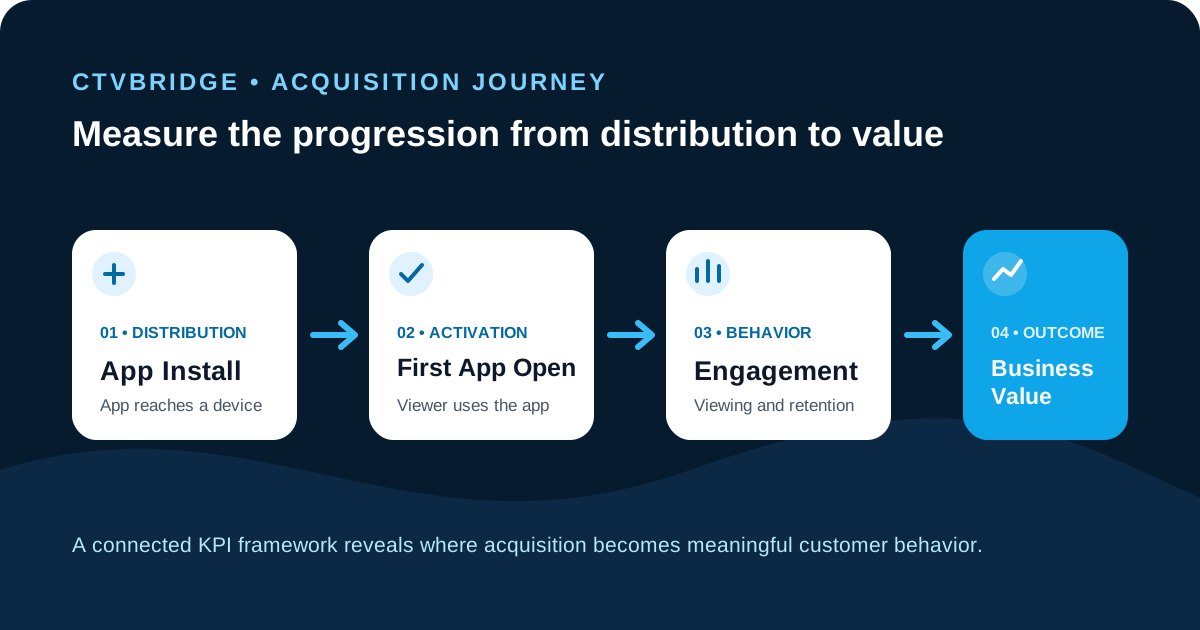
This approach keeps install data in the measurement stack, but puts it in the right place. An install is a distribution signal. A verified first open is an activation signal. Engagement and revenue metrics tell the business whether that activation ultimately created value.
Do Not Manage the Business With One KPI
No single metric should define success. A streaming business needs a connected set of KPIs that shows how acquisition turns into engagement and then into economic value.
The exact KPI mix will vary by business model. An ad-supported service may put more emphasis on watch time and advertising revenue. A subscription service may place more weight on conversion, retention, churn, and LTV. A hybrid service may need both. What should remain consistent is the progression from distribution to activation to engagement to value.
Key Takeaways
- Understand what “install” really means before using it to evaluate acquisition performance.
- CTV platforms can observe app installation on their devices; measurement partners generally begin receiving app-level signals after the app launches, so similarly named metrics can represent different events.
- A verified first app open is often a stronger early signal for ROAS analysis than a platform install because it confirms that the viewer actually used the app.
- Roku account synchronization can cause one add action to place an app on multiple linked devices, illustrating why install volume does not always equal intentional activation.
- Do not manage streaming growth with one KPI. Track first app opens, repeat app opens, watch time, subscriptions, churn or disconnect rates, LTV, ROAS, and other metrics relevant to the business model. Use those metrics together to understand retention rather than treating retention itself as a single metric.
- Use downstream engagement and value to determine which campaigns deserve more investment, while recognizing that cross-device attribution may not capture every customer journey perfectly.
References
- Roku Support — How to add apps to your Roku streaming device (official Roku documentation)
- Roku Support — Roku account and device support documentation
- AppsFlyer — Documentation referenced in the approved research dossier on first-launch attribution behavior
- Adjust — What is an install? (official Adjust glossary)
AI Transparency
CTVBridge uses AI tools to support research, content development, and editorial review. All articles are reviewed and approved by a human editor, and factual claims are supported by cited sources.